Skip content
Dojo Tutor
Log inTry class

Biology Tutoring

Personalized support from experienced teachers, with the flexibility of learning online.

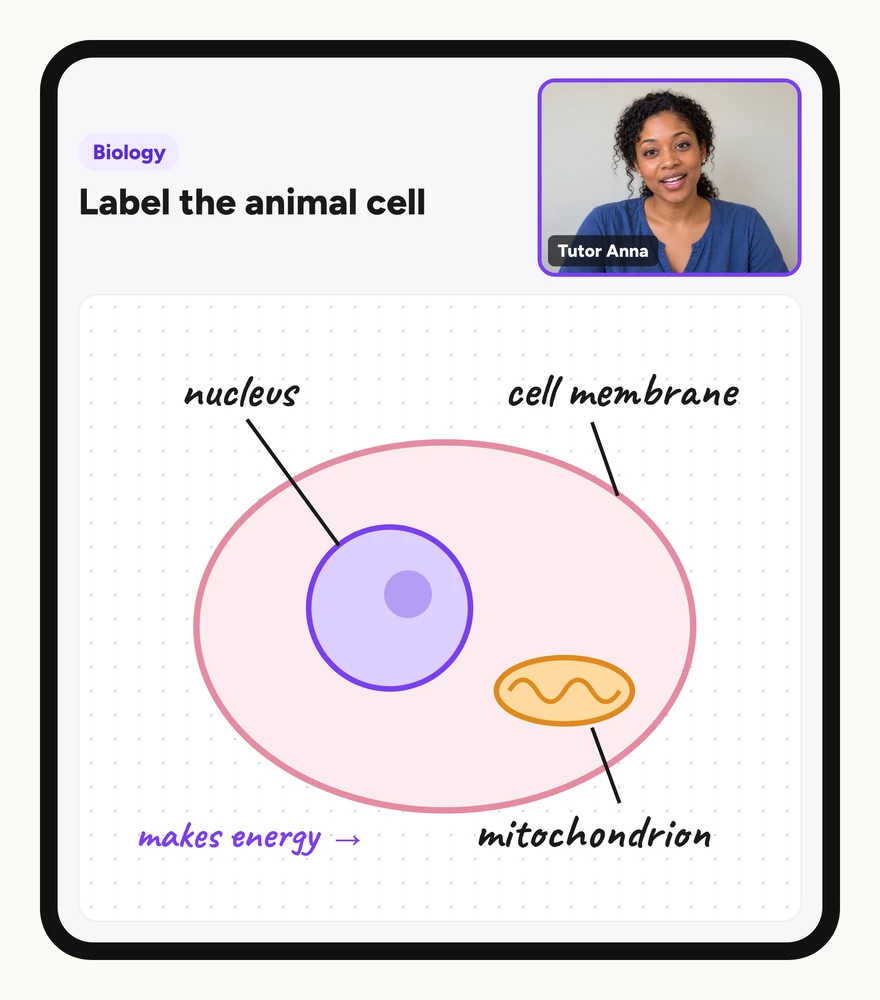
Illustration of an online biology lesson: a tutor on video and a whiteboard diagram of an animal cell labeling the nucleus, cell membrane, and mitochondrion.

Her tutor has been wonderful and so patient — Sarah M

Try a class

Top Biology Tutors

5 of 24 tutors shown · 4.9 avg rating from 1,973 reviews

All grades

Available Mon, Tue, Wed, Thu, Fri, Sat

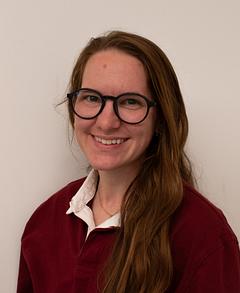
Hi! My name is Emma and I'm a PhD student studying physiology. I've been teaching anatomy and physiology classes for the past few years, and have…

Mrs. McCoy

Certified classroom teacher

Super tutor

5.0

748 ratings

4 years

Experience

Pre-K - 8th

Available Wed, Fri

Can support: ADHD, Dyslexia, Behavioral ...

With three years of teaching under my belt, I have worked with little learners in Kindergarten and PreK, as well as fifth graders in Alabama. I hold…

4th - 12th

Available Sun, Mon, Tue, Wed, Thu, Fri

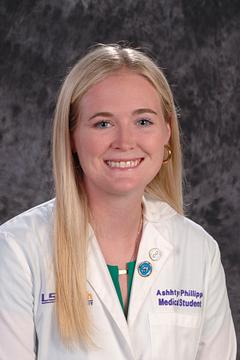
Hello! My name is Ashtyn, and I am currently a medical student with a strong background in both math and science. I earned my bachelor's degree in…

K-6th grade

Available Fri, Sat

Can support: ESL, Gifted & talented

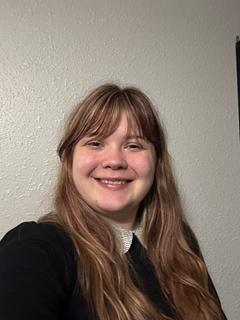
As we begin the new school year, 🍎now is the perfect time to help students feel confident and ready to learn. The beginning of the school year is a…

8th - 12th

Available Sun, Mon, Tue, Wed, Thu, Sat

I have been tutoring for over 10 years students from middle school all the way through college. I also work as a chiropractor. My hobbies include…

Biology tutoring that connects concepts to living systems

Biology asks students to move between scales: from molecules to cells, from cells to organisms, from organisms to ecosystems. A diagram may show a phospholipid bilayer, a food web, or the stages of mitosis, and each requires different reasoning. Students may memorize a term without understanding the process it describes, or recognize a structure without explaining its function.

Tutors can start with the point where the explanation breaks down. That might mean connecting base-pairing rules to transcription, using a sorting activity to distinguish biotic from abiotic factors, or explaining why an enzyme speeds a reaction. Drawings, sequences, and worked examples can help students show what they understand and identify the next step to practice.

Why families look for Biology support

Vocabulary feels disconnected from the underlying process

Students may define organelles or ecological terms without explaining what those structures do or how they interact. Tutors can ask students to describe a function, trace a pathway, or compare two related concepts, connecting the label to the biological role it names.

Diagrams and cycles need more than memorization

A cell diagram or biogeochemical cycle can contain many arrows and labels. Tutors can help students follow one pathway at a time, explain what each step accomplishes, and check whether the sequence makes sense as a connected process rather than isolated facts.

Where students can get stuck in Biology

Confusing structures that sound similar or share a root

Tutors can compare a cell membrane with a cell wall by connecting each structure to its function. Cell membranes regulate movement into and out of cells. Cell walls provide support in plants, fungi, and many bacteria, while animal cells lack walls. Students can label the structures and explain which cell type a diagram represents.

Sorting living, once-living, and non-living factors

Tutors can distinguish living components, such as mushrooms and bacteria, from nonliving conditions, such as water, light, and temperature. Soil is a mixture containing mineral material, organic matter, and organisms. Asking which component a question refers to avoids treating the whole mixture as a single living thing.

Applying base-pairing rules without tracking the location

DNA uses A–T and C–G base pairs; a complementary RNA strand uses U in place of T. In a eukaryotic cell, transcription takes place in the nucleus, where RNA polymerase uses a DNA template to build RNA. Tutors can distinguish the DNA template, the RNA copy, and translation at a ribosome, asking what each stage produces.

Describing enzyme action without explaining the mechanism

Most enzymes are proteins that speed reactions by lowering activation energy. Tutors can trace a substrate binding to an active site, the reaction, and release of products, then explain that the enzyme is not used up by that reaction. Comparing an enzyme's shape and its substrate helps connect labels to the process.

Mixing up the inputs and outputs of photosynthesis and cellular respiration

Photosynthesis captures light energy to build sugars, using carbon dioxide and water and releasing oxygen. Aerobic respiration transfers energy from glucose into ATP while producing carbon dioxide and water. In plant and animal cells, respiration begins in the cytoplasm and continues through stages in mitochondria. Photosynthetic plant cells carry out both processes.

How Biology tutors make processes clearer

Use a hierarchy or sequence to organize related terms

Ecological organization moves from organism to population, community, ecosystem, and biosphere. Tutors can ask students to recall the sequence, then define each level and give an example. Practicing retrieval in order reinforces both the terms and their relationships, making the hierarchy easier to apply in a new context.

  1. List the levels from smallest to largest.
  2. Define each term and provide a concrete example.
  3. Explain how one level contains or connects to the next.
  4. Apply the sequence to a specific ecosystem or question.

Trace one molecule or signal through a biological pathway

In a eukaryotic cell, RNA polymerase builds an RNA strand from a DNA template in the nucleus. After processing, messenger RNA can move to ribosomes in the cytoplasm, where translation builds a protein. Tutors can trace the template, RNA, and protein as distinct molecules and ask what each stage produces.

Compare paired processes to highlight their differences

With cytokinesis, mitosis generally yields two daughter cells with the same chromosome number, supporting growth and repair. Meiosis halves the chromosome number through two divisions, yielding four haploid cells; their development into reproductive cells depends on the organism. Tutors can compare division number, chromosome number, and purpose.

Putting Biology concepts into practice

Original examples that connect a definition to a biological function or process.

From base-pairing rules to a complementary strand

Use a short DNA template written 3′-ATCG-5′. Its complementary DNA strand is 5′-TAGC-3′, while the complementary RNA sequence is 5′-UAGC-3′. Tutors can label the template and strand directions, then ask why RNA contains U where the complementary DNA strand contains T.

From a food web to energy flow and population effects

Use an original simple web: grass is eaten by rabbits, rabbits are eaten by foxes, and both rabbits and foxes rely on the grass indirectly or directly. Ask what happens if the grass population declines. Students can explain that herbivorous rabbits lose their food source first, then fox populations may decline due to fewer rabbits. Tutors can distinguish direct effects from secondary consequences.

Inside a 25-minute session

What a Biology tutoring session can look like

This illustrative lesson focuses on distinguishing biotic and abiotic factors through classification and reasoning. Tutors can choose a different topic—such as cell organelles, enzyme action, or a biogeochemical cycle—and adjust the pace to match the student's current work.

  1. 0–3 min

    Define the two categories

    Compare living components, such as a tree or mushroom, with nonliving environmental factors such as sunlight or temperature. Students explain what makes each example fit its category.

  2. 3–10 min

    Sort a mixed set of items

    Sort examples such as water, a mushroom, a rock, and bacteria. Discuss why living organisms and nonliving conditions are different categories. Introduce a soil sample as a mixture whose individual components need to be identified.

  3. 10–16 min

    Discuss a challenging case

    Compare the mineral particles, water, and organisms in a soil sample. Students can identify nonliving components and living organisms separately. Tutors can ask which part a question refers to, rather than use whether the entire sample grows as a test for every component.

  4. 16–22 min

    Apply the distinction to an ecosystem scenario

    Describe a pond ecosystem and ask students to identify three biotic factors (e.g., fish, algae, bacteria) and three abiotic factors (e.g., water, sunlight, temperature). Check that each classification matches the definitions and that students can explain their choices.

  5. 22–25 min

    Review reasoning and choose next practice

    Revisit one item that caused uncertainty and ask the student to explain the correct classification. Decide whether to continue with ecological organization, food webs, or another topic, depending on the student's confidence and upcoming assignments.

Example timings only. The topic, activities, and pace can change with the student's needs and the complexity of the material.

Frequently Asked Questions

Terms of servicePrivacy PolicyNotice at Collection

© 2026 ClassDojo. All Rights Reserved.